./run il-consiglio-dellai-non-conta-il-guardrail-che-lo-boccia-si
The AI's advice doesn't count: what counts is the guardrail that rejects it
How I moved a small mail cluster from DMARC p=none to real enforcement without burning legitimate mail: a readiness score, a wave-based rollout, and an advisor…
- status
- alive
- project
- dmarcEnforcement
- updated
- 2026-09-20
- tags
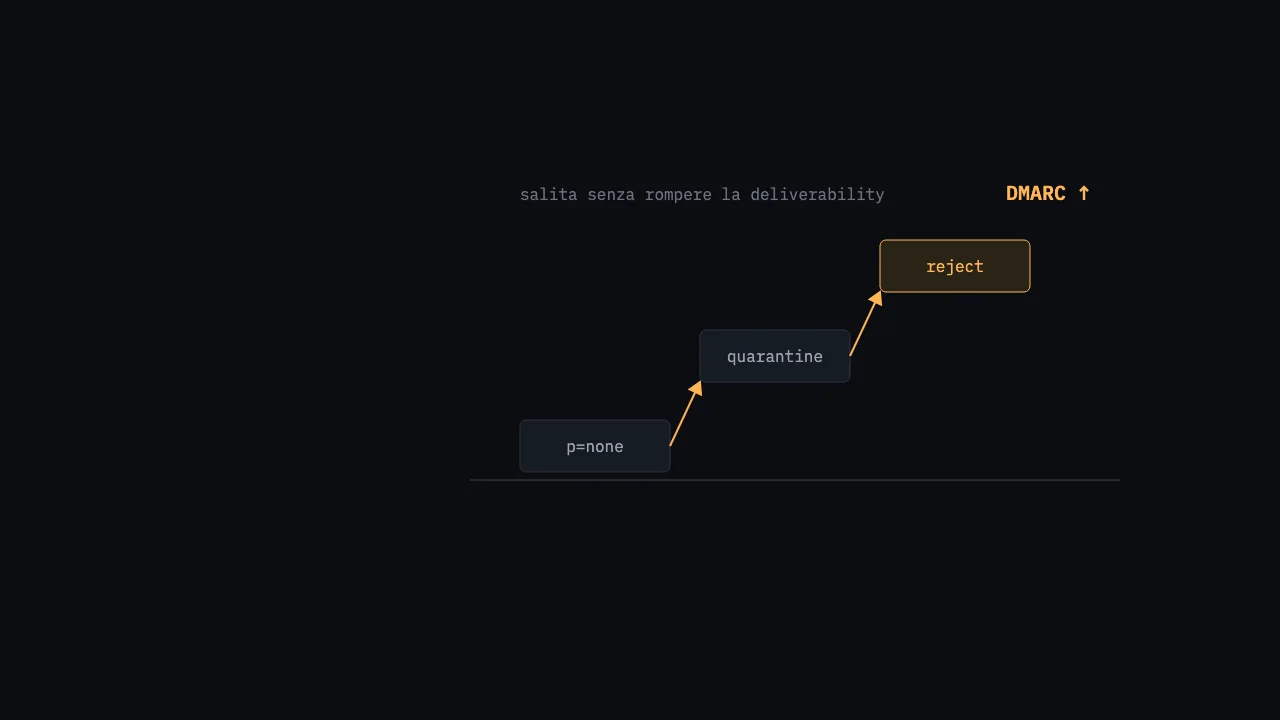
p=none is the most widespread DMARC record in the world, and it’s also the most useless: it declares “check me” and then enforces nothing. Anyone can still send mail in your name. The problem is that the next step — quarantine, then reject — is the one that sends your legitimate mail to spam if you get it wrong, and it’s not a one-minute rollback: you see the damage days later, in the aggregate reports. I built a small platform to take that step on a personal mail cluster (two nodes, a handful of domains) in an observable, reversible way. And the most interesting part wasn’t the LLM advisor that recommends the policies. It was designing it so that its opinion wouldn’t matter.
The idea
A DMARC domain should always have a clear state: who legitimately sends in its name, how much of that mail is aligned (SPF/DKIM coming back with the right domain), and what the next safe move is. The platform collects DMARC aggregate reports into Postgres, classifies every source IP, computes a readiness score from 0 to 100, and produces a policy recommendation. No automatic DNS changes: the machine advises, the human applies by hand. This isn’t laziness, it’s the main safety guarantee.
How it actually works
The score is a deterministic weighted sum, not a black box:
score = round(
    40 * clamp(pct_aligned_30d)                 # allineamento è tutto
    + 15 * int(dkim_present_for_primary_sources)
    + 15 * int(spf_within_10_lookups)           # SPF entro 10 lookup DNS
    + 10 * days_ratio                           # osservazione / 14 giorni
    + 10 * (1 - clamp(unknown_sources_ratio))
    + 10 * (1 - clamp(spoofing_likely_volume_ratio))
)
Forty points out of a hundred come from alignment: if most of the mail doesn’t come back aligned, you’re not ready for anything, full stop. From that score comes a monotone, cautious progression — never the direct jump that kills deliverability:
p=none
p=quarantine; pct=10 → 25 → 50 → 100
p=reject; pct=10 → 50 → 100
With hard thresholds in code: reject only above a score of 90, quarantine only above 60, and in any case at least 14 days of observation before asking for pct=100. The source classification is just as brutal and readable: over 500 messages from an unaligned IP with an unknown ASN → spoofing_likely; local cluster IPs → trusted; fewer than 50 messages → unknown_low_volume. Rules, not vibes.
The catch: the advisor I made irrelevant
Then I added the LLM. The temptation was to feed it the domain dossier and do what it says. I did the opposite. The advisor has a provider chain — a Claude proxy, then OpenAI, then a fallback to deterministic rules — but the key point is that every path, including the model’s success, goes through the same guardrail function:
def validate_recommendation(payload, readiness_score, has_blocking_unknown=False):
    if payload.get("recommended_policy") not in ALLOWED_POLICIES:
        raise ValueError("invalid recommended_policy")
    if policy == "reject" and readiness_score < 90:
        raise ValueError("reject blocked by readiness guardrail")
    if policy == "quarantine" and readiness_score < 60:
        raise ValueError("quarantine blocked by readiness guardrail (<60)")
    if has_blocking_unknown and policy in {"quarantine", "reject"}:
        raise ValueError("enforcement blocked by unknown sources")
    ...
If the model recommends reject on a domain with a score of 74, the guardrail rejects it with a ValueError, and that provider is treated as failed: it moves on to the next one in the chain. The system prompt tells the model the same rules (“don’t recommend reject below 90”), but I don’t trust the prompt: I trust the raise. The model is a source of hypotheses; the authority is the deterministic code that validates them.
The counter-intuitive discovery came with the fallback. The rules fallback is designed to “never fail” — it must always return something safe to the dashboard. But the fallback derives its recommendation from the score… and the score can drop below the threshold mid-window, while the dossier it’s evaluating contained a higher one. Result: the deterministic rule can recommend an enforcement that the guardrail then rejects. Two pieces of my own logic disagreeing. The solution isn’t to force them to match, it’s to degrade explicitly:
try:
    validated = validate_recommendation(recommendation, readiness_score, has_blocking_unknown)
except ValueError as exc:
    validated = {
        "recommended_policy": "none",          # in caso di dubbio, non fare niente
        "recommended_pct": 100,
        "rationale": f"safe fallback: {exc}",
        "risk_level": "high",
        "confidence": 0.4,
        "generated_by": "rules:safe-fallback",
    }
When even the fallback gets rejected, the answer isn’t an exception that makes the advisor unavailable: it’s “go back to p=none”, which is always safe. Better a dashboard that honestly says “I don’t advise moving” than one that breaks. On top of that: an SHA256 cache on the canonical dossier (TTL 6h) so as not to burn quota, and a per-provider circuit breaker (3 failures → parked for 300s) to avoid cascades of timeouts.
The rest is dry-run everywhere
The 0.4.0 rollout came in waves (A→G): DNS scan, Rspamd snapshot, XSD validator for the reports, an outbound send gate, DKIM rotation tooling, Prometheus metrics, CI. The golden rule written at the top of the plan: no data deleted, no email lost. Every worker is read-only outside the DB and idempotent — scan-dns inserts a row only when the DNS value has changed compared to the last snapshot, and logs the drift; it never touches DNS. The retention job runs in dry-run by default and only counts until I review the numbers by hand. And apply_dns_change in production always does only this:
def apply_dns_change(*, dns_auto_apply, domain, new_value):
    if not dns_auto_apply:
        raise DnsApplyBlocked("DNS auto-apply disabled until Phase 4 approval workflow")
Auto-apply is wired OFF. The “change the DNS by itself” feature has never been enabled, and in the plan it won’t be without an explicit approval.
Honest gotchas
- Doc/reality drift, in both directions. The test count wobbles: one doc says “157 passed”, the rollout runbook declares “168”, and today the repo has 225
test_functions across 28 files. The numbers in changelogs age faster than the code. And the README undersells itself: it says “local MVP scaffold, workers in dry-run”, but the internal reports already show domains atp=quarantine; pct=100in monitored production, with Gmail confirmingdkim=pass / spf=pass / dmarc=pass. Reality is further ahead than its storefront. - The
quarantineguardrail came later. In the first version onlyrejecthad a threshold; a provider could prescribequarantineon a domain with practically zero data. I added the threshold at 60 when I realized that “less than reject” doesn’t mean “safe”. - The circuit breaker is in-memory. On pod restart it starts clean. For a low-frequency advisor that’s perfectly fine; if this became a high-volume service, that state would need to be shared.
How it’s going
Shipped, and in use. A small group of domains is at p=quarantine; pct=100 with positive external evidence; others are in “watch”, waiting for more volume before being promoted. The LLM advisor is queued behind the other gates: until then it’s the rules chain that responds, which is exactly the point — it works without a model. No DNS change has been applied automatically. Not one.
What I learned
When you put an LLM in an operational path, the right question isn’t “how good is the model”, it’s “what happens when it’s wrong, and who stops it”. The best answer I found is to make every source — model, rule, cache — converge on the same deterministic guardrail, and to design failure as a first-class state: if everything collapses, the recommendation is “don’t move”. In the mail domain this translates into an almost boring rule: safety isn’t in the advice, it’s in the raise that can reject it. And the fact that even my deterministic logic can contradict the guardrail reminded me that “deterministic” doesn’t mean “always in agreement with itself over time”.
Updates
2026-09A domain that vanished on its own, and the private DNS that was lying to rspamd
I found one of the cluster’s domains in SERVFAIL everywhere: the zone on the managed DNS hadn’t been deleted by hand, it had been auto-removed after the nameservers were moved elsewhere, with the provider marking it “zone_moved”, deleting it and then purging it at exact seven-day intervals. I rebuilt it by replaying eighteen months of DNS record audit-logs instead of guessing, and I realigned mail authentication with the rest of the platform: SPF verified, DMARC with fo=1 but kept at p=none until the first aggregate reports confirm the pass rates, TLS-RPT published, MTA-STS policy added to the repo and served from the endpoint in mode: testing. DKIM simply didn’t exist for that domain: I generated the selector, published the TXT before enabling signing, then added the domain to the maps. Verification, though, kept returning R_DKIM_PERMFAIL while the public DNS was perfect — and the culprit was in-house: the mail server’s BIND was still authoritative for that domain with a zone file frozen at a 2024 serial, so rspamd was resolving a private view with no DKIM and no DMARC. With the zone stanza commented out (file kept), verification is back to R_DKIM_ALLOW and DMARC_POLICY_ALLOW. Lesson to put on the inventory: the same split-horizon affects five other domains, where rspamd evaluates stale or absent policies — noted, and deferred to a dedicated pass.
grep -rl 'same thread' ~/lab
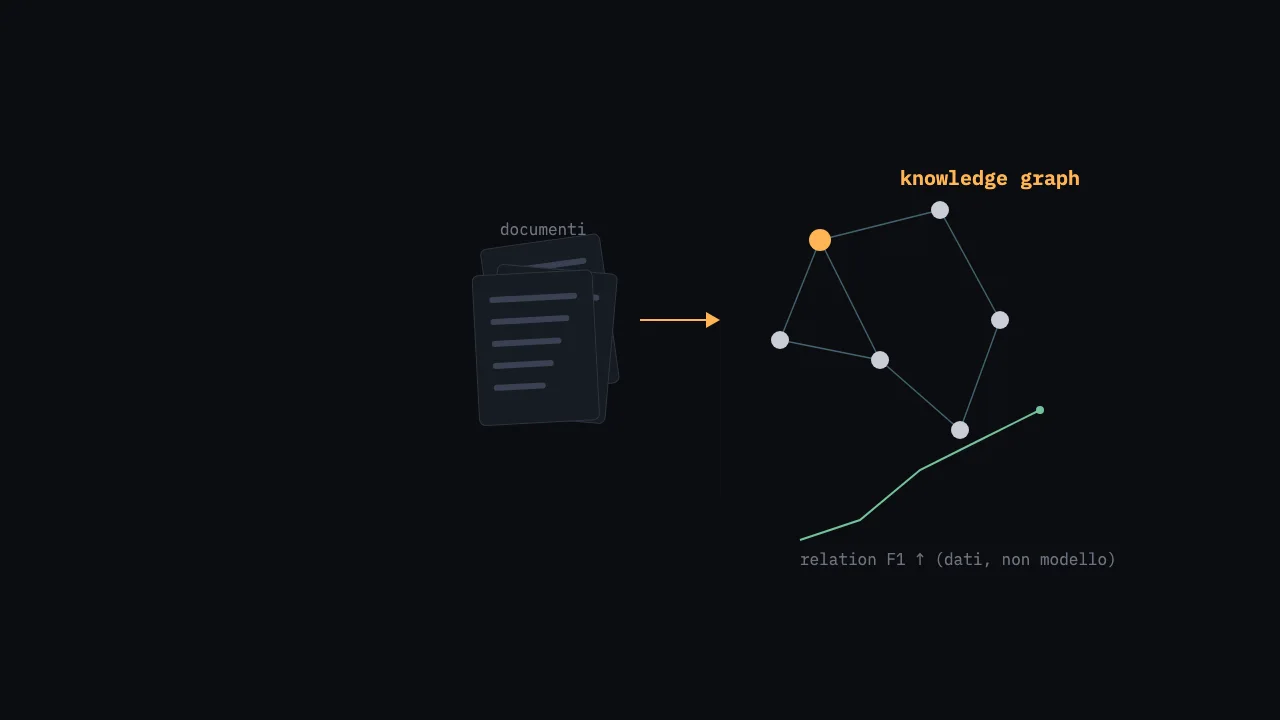
Relation F1 at 0.38: when the lesson wasn't the model, but the data
Technical diary of a fine-tuning: LoRA on a 27B model to extract knowledge graphs from messy documents. The turning point wasn't a bigger model…
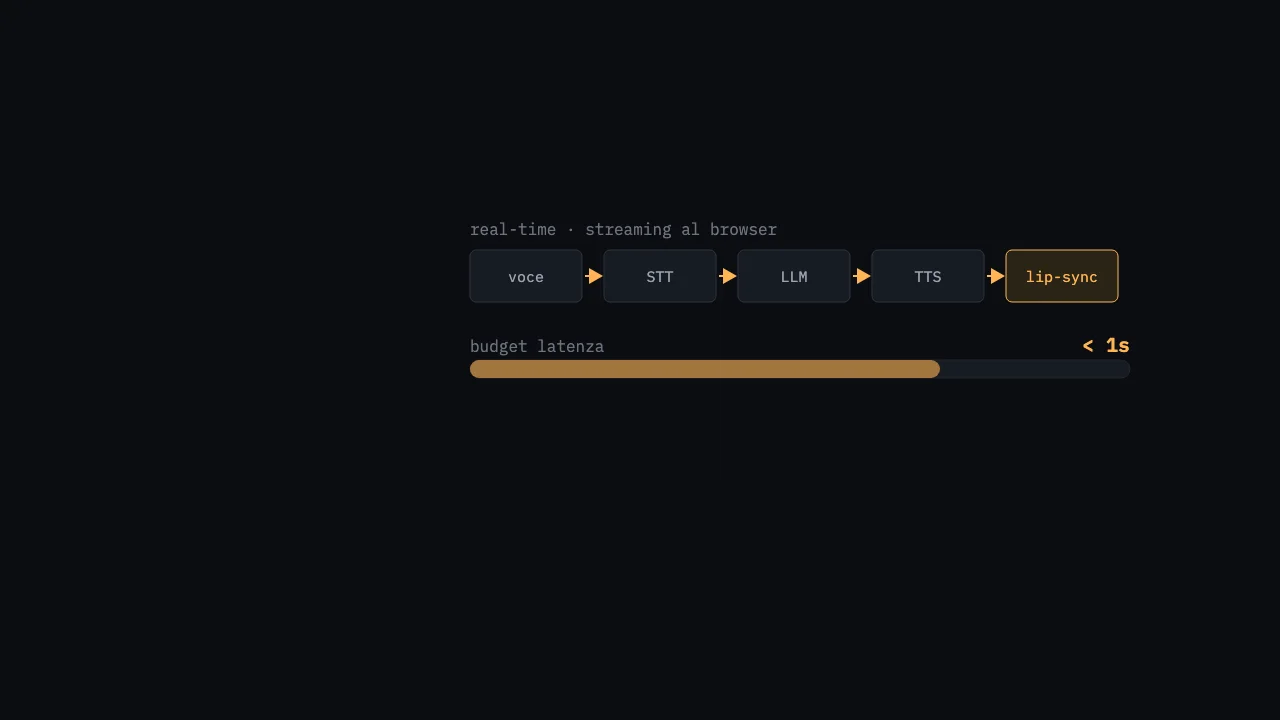
The avatar that talks before it moves its lips
Diary of a real-time conversational AI avatar: STT, LLM, TTS and lip-sync on GPU. The hard decision was decoupling audio from video.
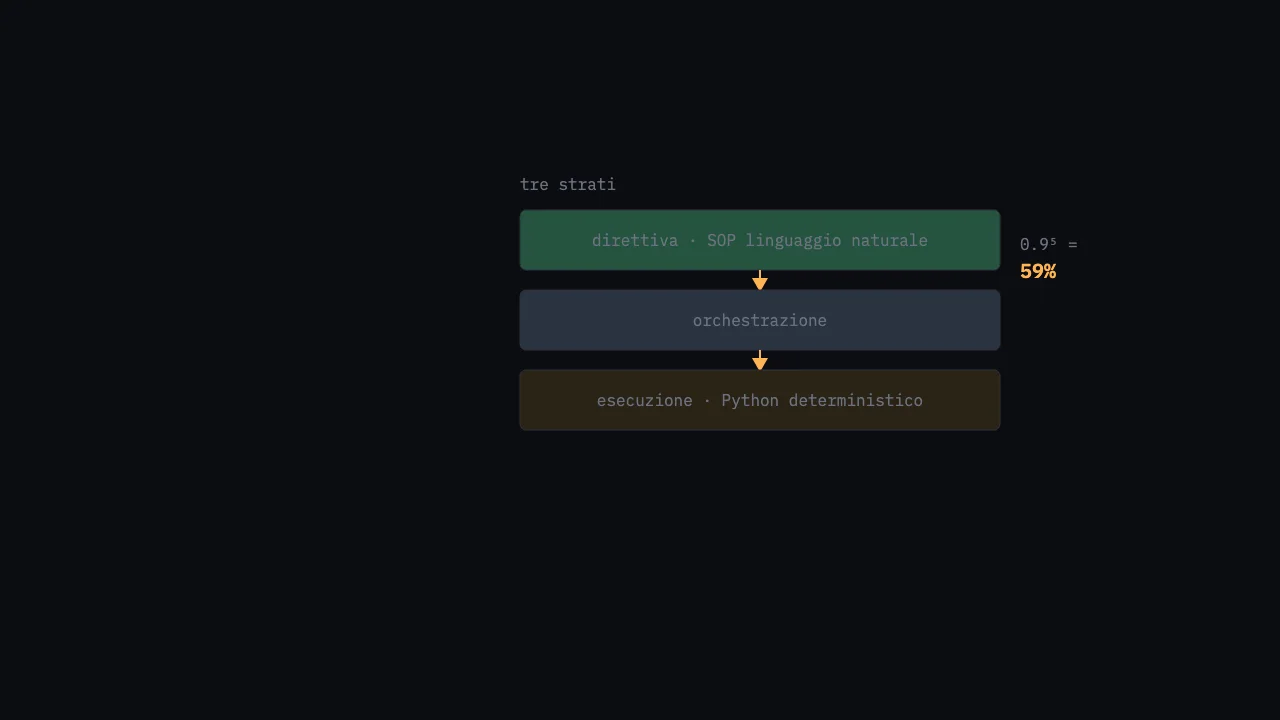
The 59%: why I stopped letting the LLM do everything
Diary of a multi-agent scaffold on Agno: three layers directive/orchestration/execution, natural-language SOPs on top, deterministic Python underneath…