./run openbricks-piattaforma-dati-open-source-openshift
Openbricks: when the governance plan collapsed on contact with reality
Technical diary of Openbricks: an open-source lakehouse on bare-metal OpenShift via GitOps. The 'Ranger unifies Trino and Spark' plan collapsed — here's how…
- status
- wip
- project
- openbricks
- updated
- 2026-09-20
- tags
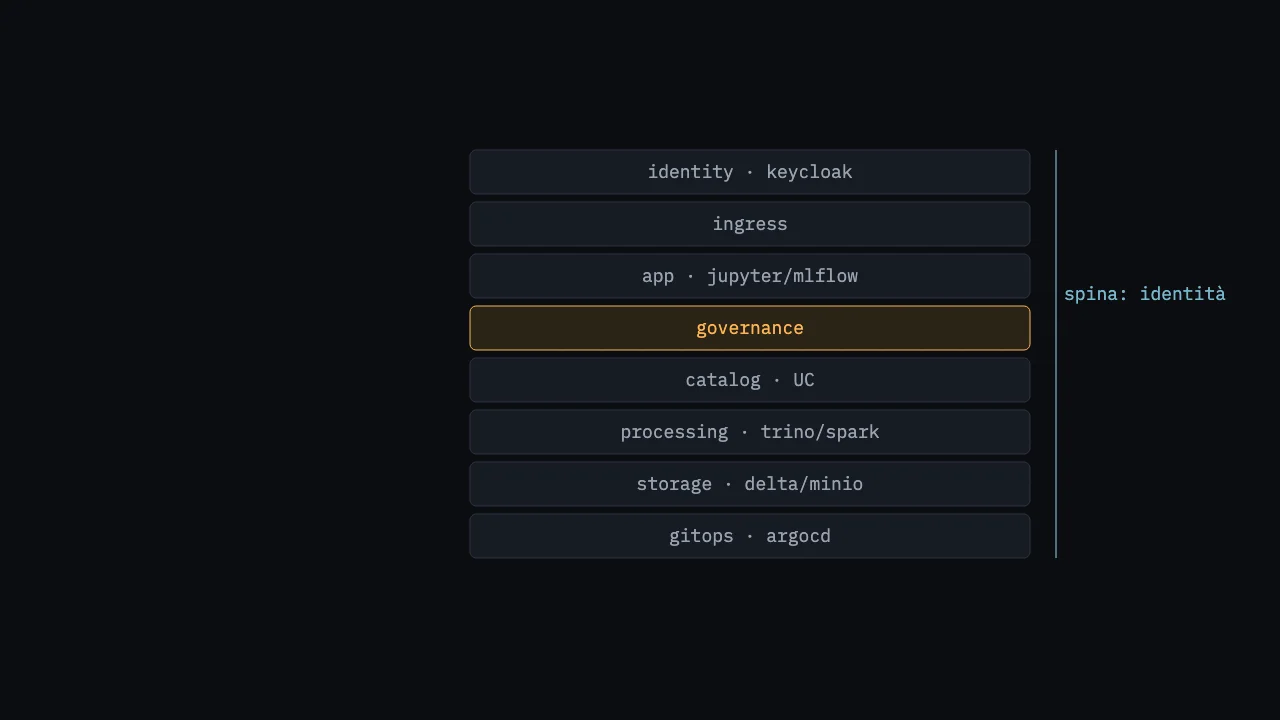
Databricks is convenient. It’s also a closed box on someone else’s cloud with a bill that keeps growing. The question that got me started: how much of that convenience can you rebuild from open-source pieces, in-house, on your own iron? Openbricks is the attempt — an 8-layer lakehouse deployed 100% via GitOps on bare-metal OpenShift 4.18, air-gapped. And the real story is how the governance plan died and was reborn.
The stack in brief
Eight layers, from identity to storage: Keycloak (OIDC federated to LDAP/AD) and OPA on top; then OpenShift’s HAProxy router; the apps (JupyterHub, MLflow, Airflow 3, Superset, Kestra); the processing (Spark 4.0.2 via the K8s operator, Trino 479); the catalog (Unity Catalog OSS, OpenMetadata); the storage (Delta Lake on MinIO, PostgreSQL HA via CloudNativePG, Ceph); the control plane (ArgoCD, monitoring); and the GitOps deploy. Cluster: 3 workers, ~288 cores, ~768 Gi RAM.
How data flows (the first decision)
The pattern is “Unity Catalog as a passive metastore”:
- Write: Spark writes Delta tables with the UC connector (registering the metadata) but writes the bytes directly to MinIO with its own credentials.
- Read: Trino reads Delta tables directly — a file-based metastore over the transaction log in object storage — and pulls the bytes from MinIO. UC isn’t even in the read path: more passive than that isn’t possible.
- Why passive: UC OSS v0.4.0 doesn’t do credential vending to S3-compatible endpoints like MinIO (the upstream PR is still open). So UC neither validates nor distributes S3 tokens; the engines hold their own credentials, and storage is protected at the infra level. This keeps UC replaceable at zero cost.
The pivot: Ranger out, three pieces in
The plan was elegant: Apache Ranger as the single policy plane for Trino and Spark, plus OPA for Kubernetes. One place to say who sees what. Then reality:
Ranger 2.7 has a native plugin for Trino, but there’s no Ranger plugin for Spark 4.0. Ranger would cover the query engine, not the write engine — so it can’t be the “single plane.” Removed from the stack.
Redone as multi-layer authorization, each layer good at what it does: Keycloak+oauth2-proxy for platform access, OPA Gatekeeper for K8s admission, Trino’s file-based ACL for data access at query time, Unity Catalog GRANTs (ready but disabled — the UC UI has no Keycloak login, another upstream issue), OpenShift RBAC/SCC for the infra.
How permissions stay consistent across engines
There’s no single ABAC engine covering both Trino and Spark. Consistency is achieved by making identity the shared backbone and constraining where each engine can write:
- Unified identity at Keycloak. Every engine authenticates the same person against the same realm, behind a single AD. The group is the source of truth: team = AD group, mapped into the token’s
groupsclaim. - Trino enforcement. Trino runs with
access-control.name=fileplus a group-provider. Humans come in via OAuth2; non-interactive services present a Keycloak Bearer token validated via JWKS — with one necessary trick: the principal is read from a dedicatedtrino_userclaim, not frompreferred_username(which for a service account collides asservice-account-…).
http-server.authentication.type=oauth2,jwt
http-server.authentication.jwt.principal-field=trino_user   # claim dedicato, non preferred_username
http-server.authentication.jwt.required-audience=trino- Spark enforcement. No Spark authorizer: you limit the blast radius. The only service authorized to write into the
ingestschema is the governed ingest identity; everyone else has read-only on the query path. Governance sits on the query path (Trino) and on the write identity, giving consistent effective permissions without a Spark plugin.
The Trino ACL, in sanitized form — deny-by-default via a catch-all with empty privileges:
{ "tables": [
  { "group": "platform-ingest|admin", "catalog": "delta", "schema": "ingest",
    "table": ".*", "privileges": ["SELECT","INSERT","DELETE","UPDATE","OWNERSHIP"] },
  { "group": "hr|admin", "catalog": "delta", "schema": "sensitive_hr",
    "table": ".*", "privileges": ["SELECT"] },
  { "user": ".*", "catalog": "delta", "schema": "sensitive_hr",
    "table": ".*", "privileges": [] } ] }
The proof it works: an end-to-end test on the live cluster — the service JWT writes to ingest = OK; writes outside = PERMISSION_DENIED; invalid JWT = 401; and the human OAuth2 login stays intact because the two authenticators coexist.
GitOps and air-gap
Everything is ArgoCD app-of-apps: a root Application owns ~15 children, ordered with sync-waves (foundation → processing → app). Kustomize base + testing/production overlays. Being air-gapped, every Helm chart is vendored as an OCI artifact on an internal Quay — no pulls from Docker Hub at sync time. Secrets are SealedSecrets committed to git; the only one applied by hand is the repo credential to Quay (sealing it would create a circular deadlock).
Honest gotchas
- UC Iceberg REST is read-only and one of its DDLs uses
BINARY(16), which PostgreSQL rejects. - Two disjoint group systems (Keycloak vs Trino’s
group.txt), additive — a CronJob that regeneratesgroup.txtfrom Keycloak is the planned unification. group.txtmounted viasubPathdoesn’t hot-reload: it needs arollout restartof the coordinator.- The corporate CA isn’t published everywhere, handled in three different ways: a JKS truststore for the Java components, the CA baked into the image for Python (Superset), skip-verify for Go (oauth2-proxy).
- OpenShift ≠ vanilla K8s: Route not Ingress, SCC not PodSecurity,
ocnotkubectl.
What I’m learning
That “open-source” doesn’t mean “free of effort.” The bricks are free, but the mortar that holds them together — identity, consistent policy across engines, deploy reproducibility — you have to supply yourself. That mortar is exactly what you’re paying for when you pay for a closed platform. And that an elegant architecture plan holds up right until it meets “there’s no plugin for your version.”
Updates
2026-09One scanner only, and certificates the router silently throws away
I decommissioned Trivy: I was keeping two CVE scanners around, but the CronJob one had been broken for over a week — report volume full, disk quota exceeded, every namespace failing and hundreds of 0-byte files. Turning it off didn’t remove a living capability, it removed noise; and on a stack that’s almost entirely UBI it was flagging CVEs that Red Hat has already closed via backport, which the other scanner excludes by reading the VEX data. I documented the resulting gap instead of hiding it: the export for the SOC was generated only from there, so until I rebuild it on the vulnerability manager’s API I no longer have an updatable package — it’s TODO number one. On the TLS front I rolled out a batch of vanity certificates issued by the context’s internal PKI, in the test environment only, and I ran into a trap worth telling: Route.spec.tls.externalCertificate on OpenShift 4.18 isn’t among the active feature gates, so the API accepts the manifest, the Route shows up as Admitted=True, and the field is silently discarded while the router keeps serving the wildcard. Enabling it would mean TechPreviewNoUpgrade on the whole cluster — irreversible and it blocks upgrades: not happening. For now the certificate sits inline in the Route, applied outside git because TLS material doesn’t belong in git, and the choice remains open whether to move to Ingress + secretName, violating my own “Route, not Ingress” rule.
I’m building it for a real context with real requirements. Names and recipient stay out: what matters here is the how, not the for-whom. Next stop: closing out governance and moving to the ML layer.
grep -rl 'same thread' ~/lab
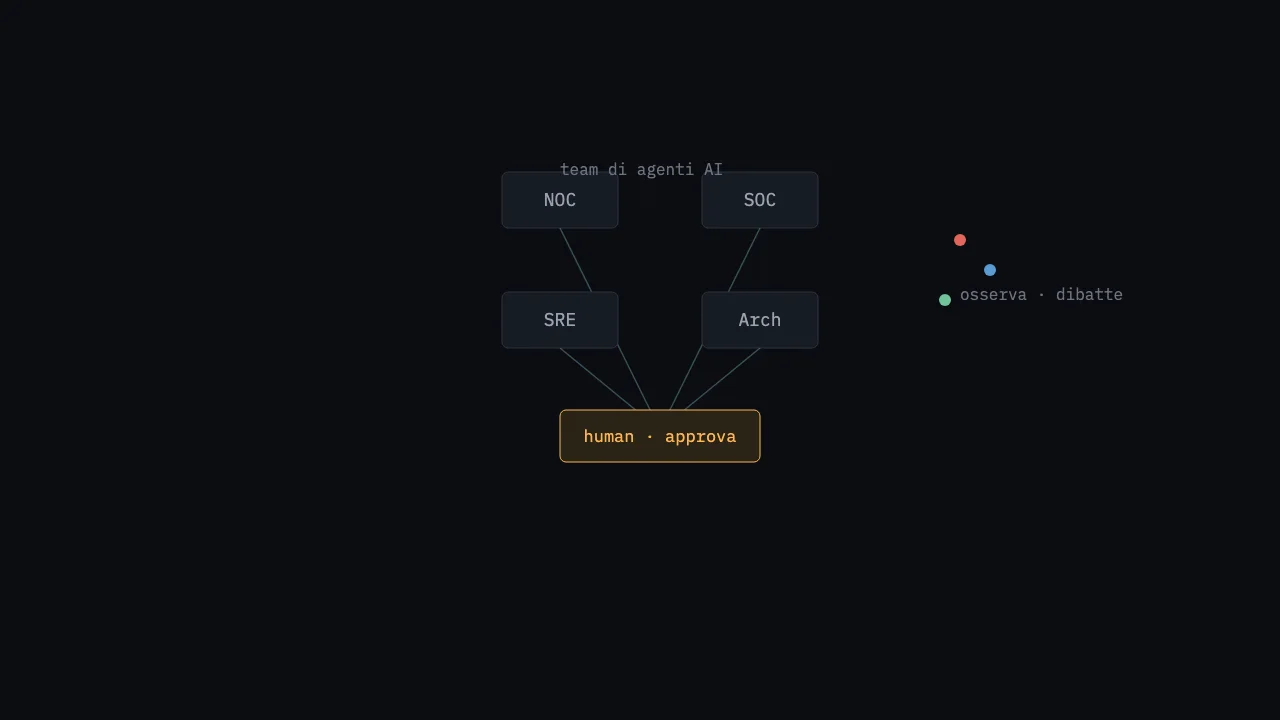
The IT department that argues with itself: three layers and a human in the loop
An IT department made of AI agents — NOC, SOC, SRE, Architecture Board — that watch a k8s cluster, rebut each other and prepare decisions for a…
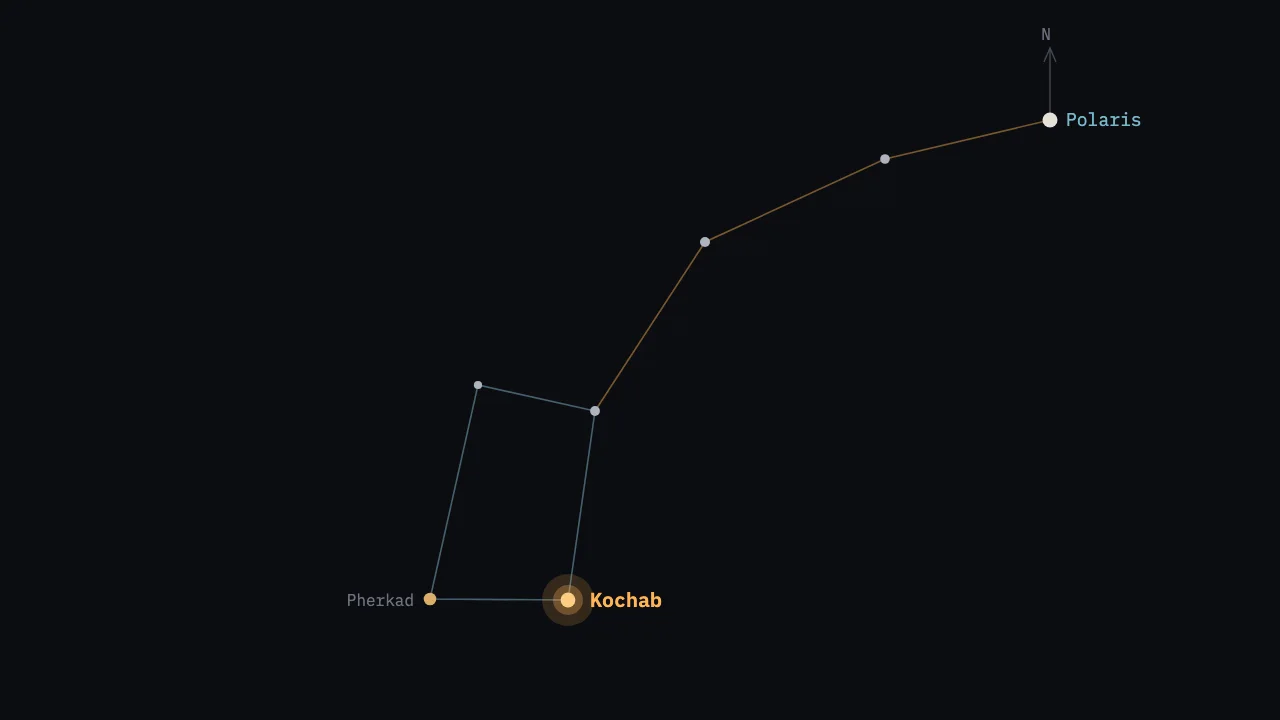
Kochab: building trust into code — the star that never deletes
Technical diary of Kochab: an outbound-only agent in Go, a security audit mapped to CIS/NIST, Ed25519-signed tasks, and one rule — it never deletes — guaranteed…
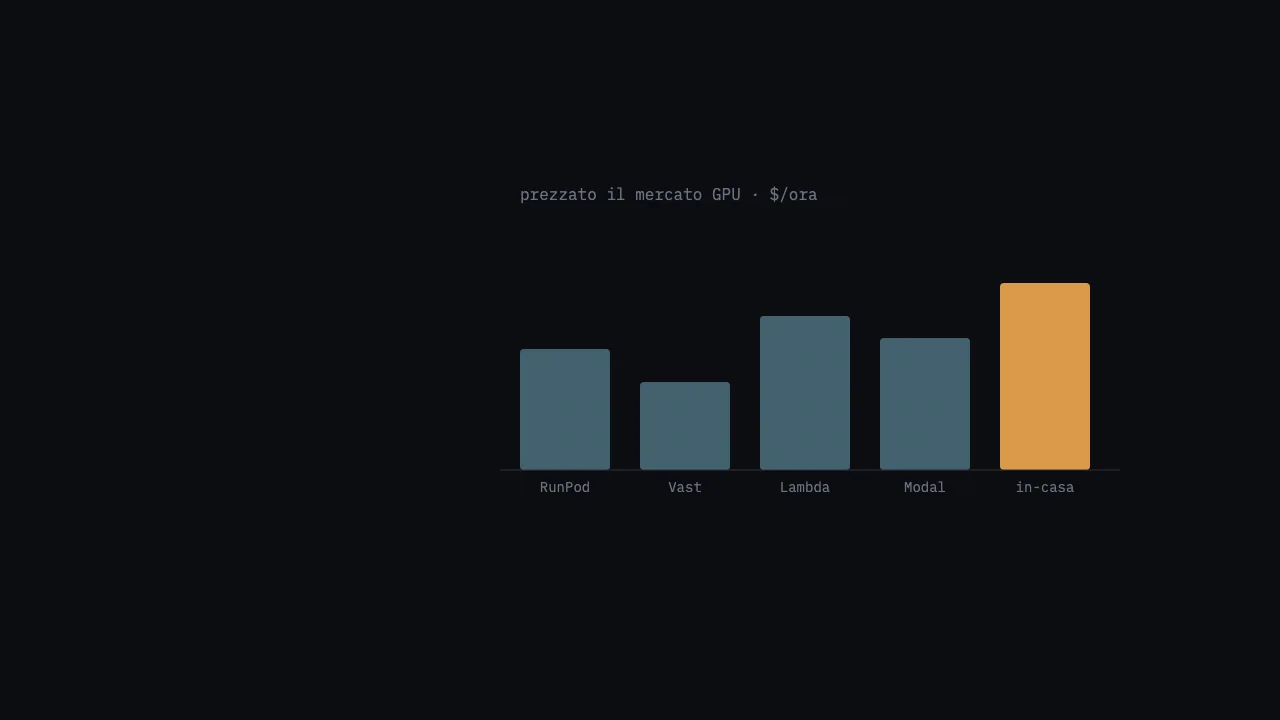
I was about to buy a GPU. I priced the entire rental market and changed my mind.
Technical journal: I priced the entire cloud GPU market (RunPod, Vast.ai, Lambda, Modal) to figure out when renting beats buying. The headline price…