./run kochab-infrastruttura-ai-guardian
Kochab: building trust into code — the star that never deletes
Technical diary of Kochab: an outbound-only agent in Go, a security audit mapped to CIS/NIST, Ed25519-signed tasks, and one rule — it never deletes — guaranteed…
- status
- wip
- project
- kochab
- updated
- 2026-07-08
- tags
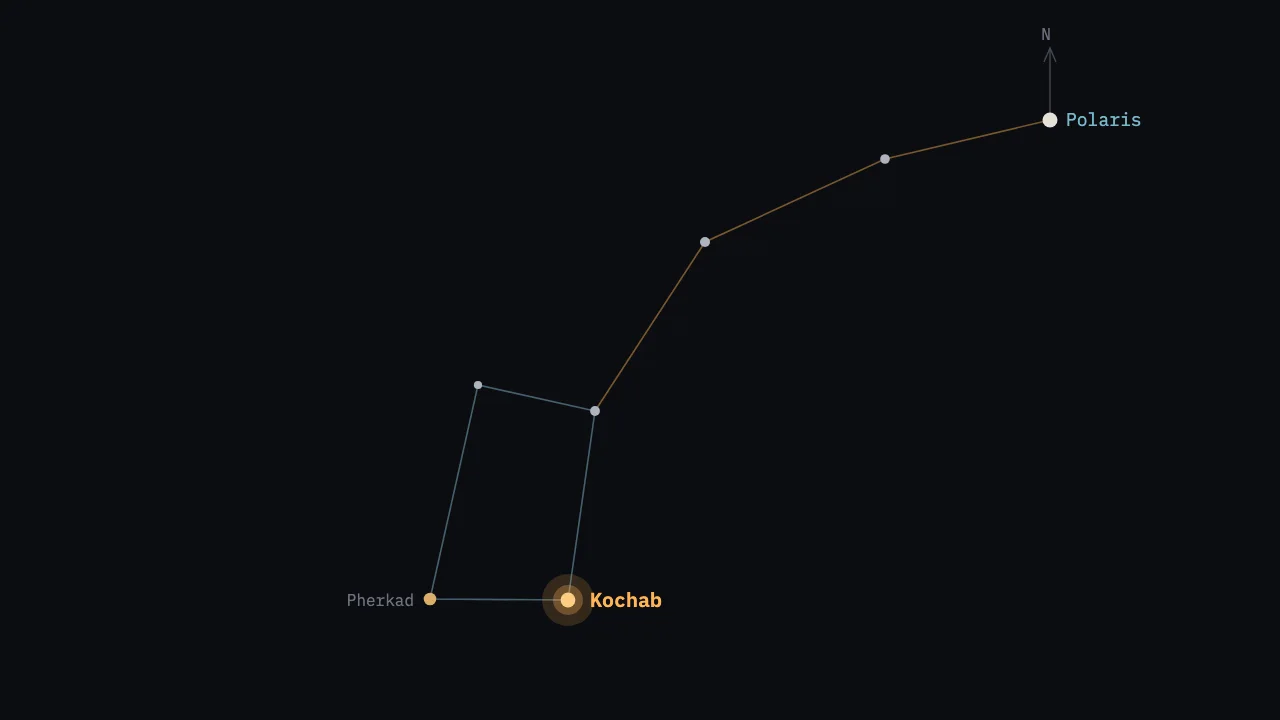
Kochab is the star at the tip of the Little Dipper — the one that points north, still while everything rotates around it. The name is a promise: a fixed point watching over your servers. But a tool that runs with privileges across all your machines is only useful if you trust it. This diary is about how trust gets written into code.
The problem
Anyone running a handful of servers lives in an awkward zone: too small for enterprise tools, too big to manage by hand. Security is the first thing to slip — permissive SSH keys, a firewall left open “temporarily” two years ago, DKIM/SPF/DMARC never sorted out.
Architecture: three pieces, one clean separation
- Agent (Go, a ~9.7 MB static binary, a 4.6 MB
.deb): runs on every host under systemd. Outbound only — no local DB, no UI, no listening port. Thego.modhas a single direct dependency. Minimal attack surface. - Platform (Go): API + out-of-band workers. It owns the inventory, the audit engine, task signing. PostgreSQL is the single source of truth.
- App: a React 19 / Vite 8 / Tailwind 4 PWA that draws the fleet as a constellation.
Why the agent calls home, and not the other way around
I ruled out SSH-exec and listening agents. The agent does HTTP long-polling, inspired by Cloudflare tunnels — “the daemon calls home, never the other way around”:
GET /v1/tasks:204= nothing to do, reconnect;200= a task;410 Gone= node decommissioned, the agent stops polling forever.- Client timeout 90s, deliberately longer than the server-side 60s wait.
- Minimum TLS 1.3, authentication required via HMAC-SHA256 over the body.
- Loop
poll → verify signature → execute → report, exponential backoff 2s→60s.
Tasks are signed with Ed25519 by the platform and verified by the agent before executing. The canonical message is identical on both sides:
// "taskID|taskType|hex(sha256(payload))|RFC3339(timestamp)"
msg := fmt.Sprintf("%s|%s|%x|%s", taskID, taskType,
    sha256.Sum256(payload), timestamp.UTC().Format(time.RFC3339))
sig := ed25519.Sign(privKey, msg)
A subtlety that cost me a bug: the signed timestamp has to match the saved created_at down to the second, or verification fails.
The audit engine
Ten checks in the initial seed, each mapped to CIS and NIST: key-only SSH (CIS-5.3.4 / AC-7), default-deny firewall, TLS ≥1.2, shadow permissions, fail2ban, unexposed services, DKIM/SPF/DMARC, backup present, Docker without host-network. Each rule is a Go file that self-registers: a new rule = a new file, no hardwired switch.
type CheckFunc func(ctx context.Context) (passed bool, context map[string]any, err error)Preconditions (a missing binary) are modeled as pass-with-context, not errors, so the report stays sensible across heterogeneous hosts. The SSH check is the most refined: it concatenates sshd_config + the .d/*.conf files in their effective order, probes every configured port to figure out whether it’s publicly exposed, and feeds those signals into the severity calculation.
Diary-level honesty: there’s still no LLM in the shipped code. It’s all deterministic. The AI is designed to sit outside the execution loop — it will generate new audit rules that are then “crystallized” into that same deterministic form and approved by a human. The reasoning: “90% accuracy per step = 59% success over 5 steps”. So the logic lives in the code, the LLM at most writes rules, and never touches a live host.
”Never deletes” — guaranteed four ways
This is the part I’m proudest of, because it’s trust made mechanical:
- Nodes are only soft-deleted.
DELETE /v1/nodes/{id}validates the reason against an allowlist and does anUPDATE removed_at = now(), never a SQLDELETE. - A CI guard enforces the filter. A script fails the build if a query over nodes lacks
removed_at IS NULL. It exists because four real “zombie node” bugs (a removed node coming back to life) had slipped through. - The audit trail is physically immutable, in Postgres, not in code:
CREATE FUNCTION prevent_audit_trail_mutation() RETURNS trigger AS $$
BEGIN
  RAISE EXCEPTION 'audit_trail is append-only: % operations are forbidden', TG_OP;
END; $$ LANGUAGE plpgsql;
CREATE TRIGGER audit_trail_immutable_delete BEFORE DELETE ON audit_trail
FOR EACH ROW EXECUTE FUNCTION prevent_audit_trail_mutation();- Findings get resolved, not deleted. And the fixes are never executed by the system: they’re rendered as copy-paste shell for a human.
There’s also an asymmetry I like: the “disable SSH passwords” fix is fail-closed — it stays hidden unless a preflight proves a working key already exists (so it can’t lock you out). Every other rule is fail-open, so a flaky probe never hides a legitimate fix.
The constellation
The fleet is a star field. Two pure, tested functions: one places the nodes in a deterministic radial layout, the other maps (state, severity, last heartbeat) → visual state, where reachability beats severity (an unreachable node is offline, period). Accessibility out of the box: 44×44px targets, aria-label in Italian, activation with Enter/Space, animation disabled with prefers-reduced-motion. And a transparency view that shows the operator exactly what the agent transmitted — because we only collect metadata, never log contents.
Honest gotchas
- README/reality drift: the docs say “Watermill for events”, the code does Postgres
LISTEN/NOTIFY+ TanStack polling. Watermill is deferred post-MVP. Better to say so. - Rules in dual representation (Go + SQL seed) create a mismatch risk, mitigated only by a grep in CI. A maintenance tax accepted to keep the CIS metadata in the DB.
How it’s going
I’m sprinting toward the MVP. The three pieces compile, the images are at release-candidate, and I’m testing it on my real machines — the best way to know whether a guardian star works is to have it watch over something that, if it goes down, ruins my day.
Code: github.com/vcnngr/kochab-agent · install via get.kochab.ai. Agent Apache-2.0, platform BSL.
grep -rl 'same thread' ~/lab
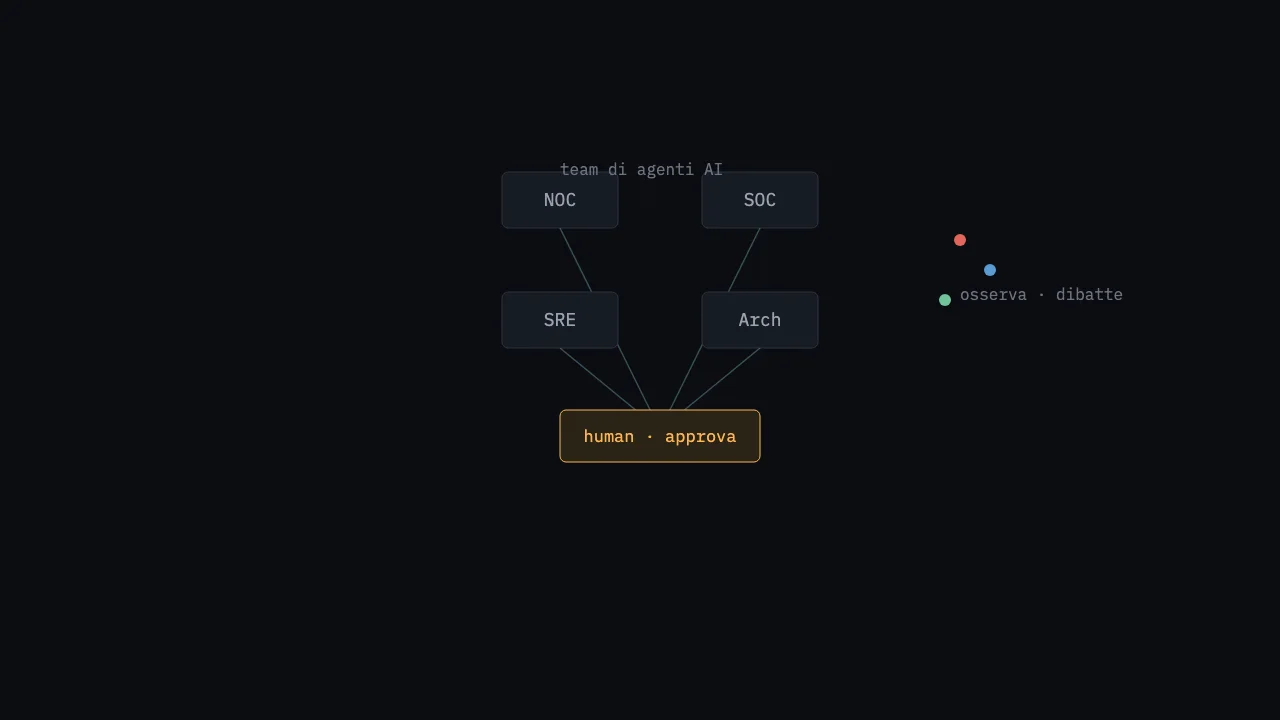
The IT department that argues with itself: three layers and a human in the loop
An IT department made of AI agents — NOC, SOC, SRE, Architecture Board — that watch a k8s cluster, rebut each other and prepare decisions for a…
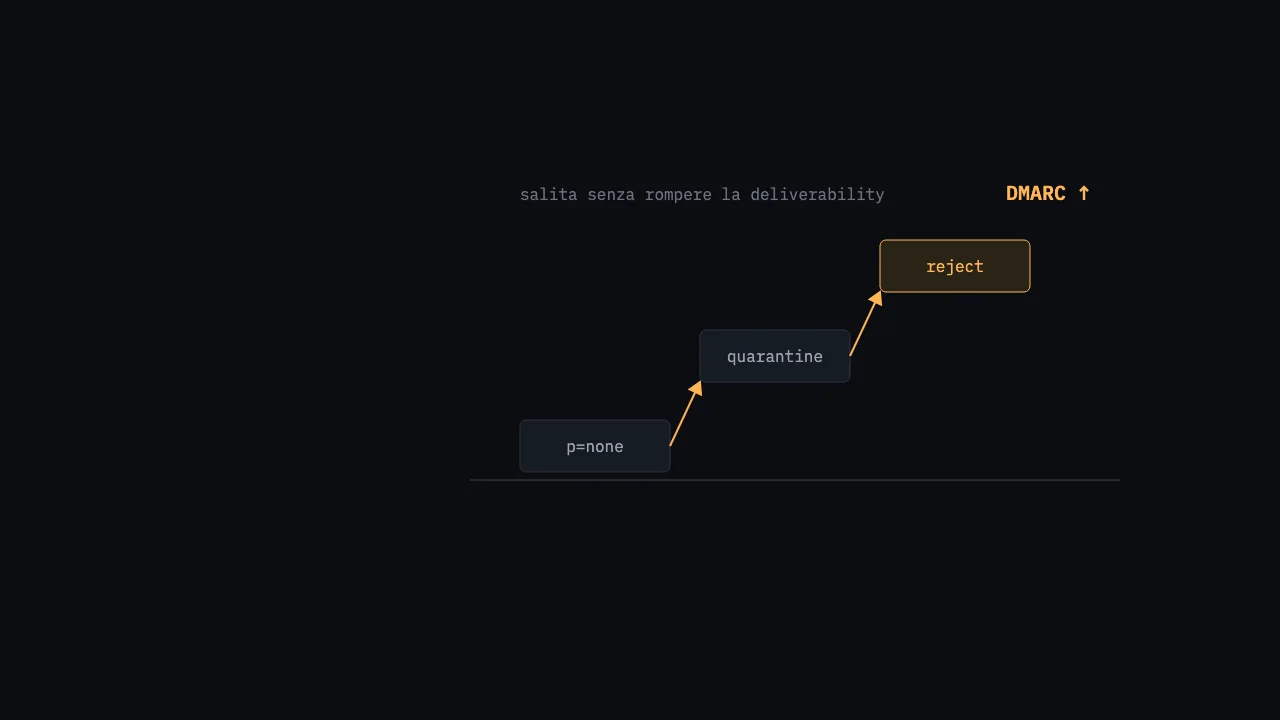
The AI's advice doesn't count: what counts is the guardrail that rejects it
How I moved a small mail cluster from DMARC p=none to real enforcement without burning legitimate mail: a readiness score, a wave-based rollout, and an advisor…
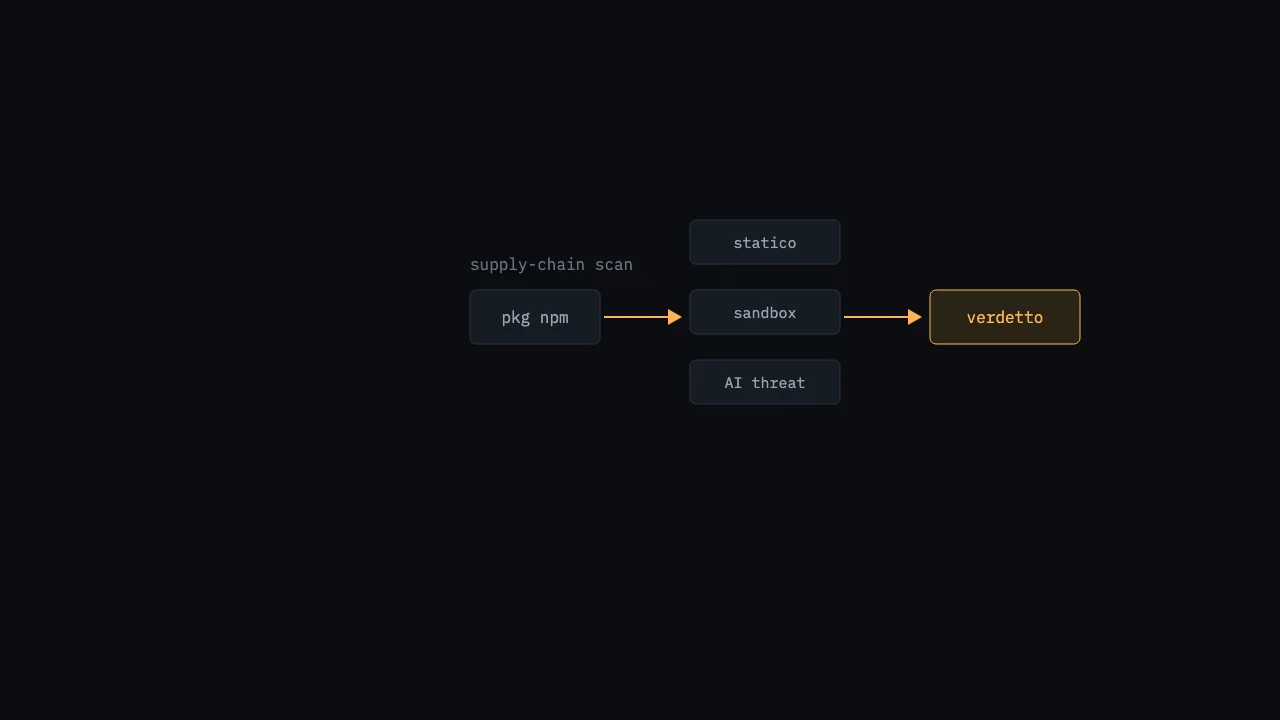
NPMShield: I designed a 7-database empire, an agent razed it to the ground
How I sketched out an anti-malware platform for npm in Claude Code — sandbox, AI, 7 databases — and how an adversarial review cut it down to a CLI and…